
RENÉ ARZE: “Fossil fuels will continue to be RELEVANT IN THE REGION’S ENERGY SUPPLY”
The General Manager for Bolivia, Chile, and Paraguay at SLB (formerly Schlumberger) highlights the importance of fossil fuels. However, he stresses that the company’s role must be that of a key player in decarbonization, as well as an important leader in geothermal, hydrogen, carbon capture, and critical minerals.
ISSUE 146 | 2025
Vesna Marinkovic U.
1What is SLB’s global roadmap to achieve decarbonization in the energy sector, and how does it align with international commitments to reduce emissions, after repositioning itself as a global technology company focused on driving energy innovation for a balanced planet?
At SLB (formerly Schlumberger), we have a clearly defined plan to achieve the full decarbonization of our global operations, in line with our vision of a balanced planet. This requires precisely a balanced energy system, capable of meeting growing demand with the lowest possible emissions footprint.
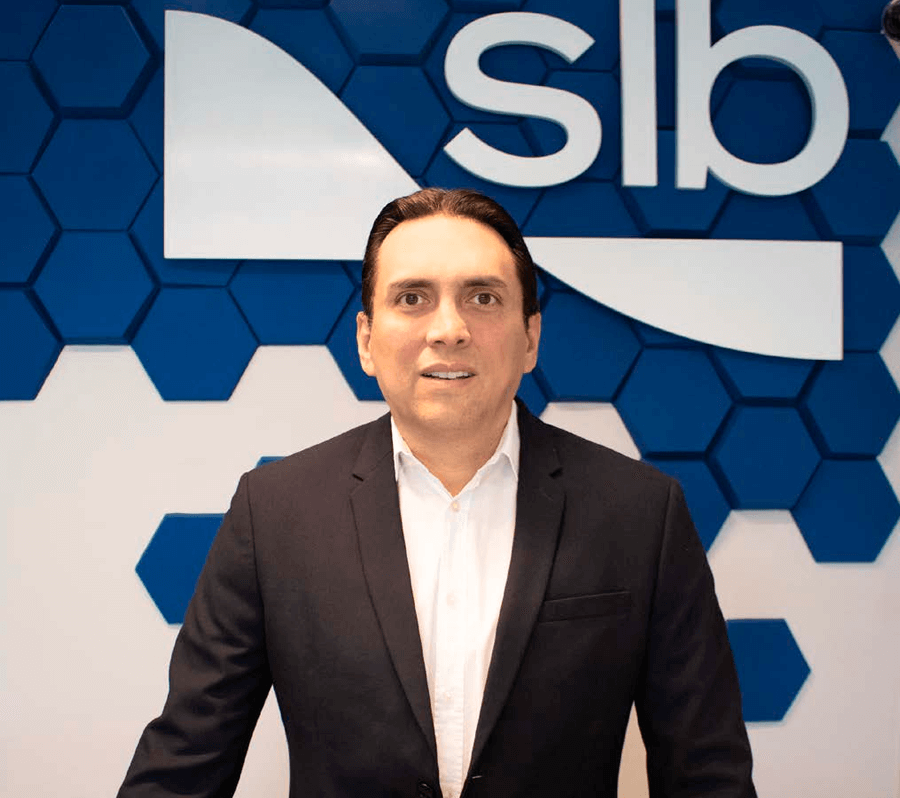
He is an Electronic Engineer with a Master’s in Business Administration from the National University of Córdoba, as well as diplomas from Georgetown University and Harvard Business School. He has over 25 years of professional experience in the Oil & Gas industry, including 20 years in managerial positions and Project Management. He has worked in Canada, Venezuela, Mexico, Brazil, the United States, Scotland, Algeria, Tunisia, Colombia, Ecuador, and Bolivia. He currently serves as General Manager for Chile, Bolivia, and Paraguay at SLB, a multinational company with operations in more than 90 countries and over 110,000 employees, recognized as a leader in providing services and products for the energy, oil, and gas industries.
In terms of goals and timelines, our commitment is even reflected in the new corporate logo, which symbolizes our milestones and deadlines toward net zero:

“SLB maintains its engineering DNA and expertise in operating under extreme conditions, but expands it into the future.”
• 2025: 30% reduction in absolute Scope 1 and 2 emissions (target already achieved in 2024).
• 2030: 50% reduction in Scope 1 and 2 emissions and 30% reduction in Scope 3 emissions.
• 2050: Achieve Net Zero in Scopes 1, 2, and 3, with minimal reliance on offsets.
Regarding our actions, it is worth highlighting that we are focused on:
• Decarbonizing our own operations: energy efficiency, electrification, more renewable energy, smart measurement, and reduced diesel use in assets and facilities.
• Decarbonizing our clients’ operations with the Transition Technologies portfolio (emissions/energy/physical impact/water/waste reduction) and digital footprint measurement/management (a plan to model and optimize decarbonization pathways).
• Large investments in new energies and carbon capture (CCUS): accelerating CCUS projects, plus collaboration with other companies on a capture and storage hub (up to 9 MtCO₂/year targeted by 2027).
• Minerals for the transition: commercial launch of Direct Lithium Extraction (DLE), designed to supply batteries with lower water use and higher recovery rates.
• Methodologies and planning: developing modeling frameworks for realistic multi-year roadmaps in O&G (optimizing reduction projects based on operational limits and budgets).
2What can you highlight about SLB’s international commitments?
• Alignment with the Paris Agreement (1.5 °C): SLB declares that its 2050 trajectory and interim targets are aligned with the “science-based” methodology and the 1.5 °C goal.
• Reduction commitments set at COPs, especially COP28, which called for 42% global emission cuts by 2030.
3 What does this mean in practice?
• For our operations: less fossil fuel use in our own operations, more low-carbon electricity, and digital energy management.
• For our clients: field technologies and software to measure, avoid, and capture emissions (methane, venting/flaring, energy use), and to model the optimal investment/impact pathway.
• For the planet: a broader energy transition ecosystem, with CCUS at scale, DLE for batteries, and industrial alliances to accelerate deployment.
4Which technological solutions does SLB consider most effective to accelerate the transition toward a low-carbon energy matrix (carbon capture and storage, hydrogen, renewables, energy efficiency, etc.)?
At SLB, we are developing clean technologies that facilitate access to energy for the benefit of all, while transferring our expertise to the renewable energy systems of the future.
We are accelerating the deployment of transition technologies focused on producing oil and gas with lower carbon emissions and reducing methane emissions.
In the digital sphere, we leverage the power of artificial intelligence and machine learning to boost operational performance and efficiency. And in New Energies, we are scaling innovative solutions and expanding our capabilities to mitigate emissions in hard-to-abate industrial sectors.
In each of these areas, we are redefining the way we work, guided by our sustainability priorities: climate action, people, and nature.

These actions not only represent the best for the planet but also strengthen our long-term competitiveness. With a diversified portfolio that benefits from investment in multiple energy sources, we believe that our values are a key differentiator for clients, partners, and employees. We have built a solid foundation to grow across all time horizons, yet we recognize that there is still work to be done. For this reason, we are fully committed to achieving our sustainability goals.
5How does SLB assess the opportunities and challenges of decarbonization in Latin America, particularly in hydrocarbon-dependent countries such as Bolivia?
Decarbonization technologies for the industry are advancing at a rapid pace and will continue to multiply in the coming years. These solutions are already available in Latin America, a region with great potential in renewable energies. However, social inequalities and economic limitations mean that the adoption of these technologies, as well as the policies that promote them, evolve more slowly than in other more developed regions, mainly due to the costs associated with their implementation.
As a result, fossil fuels will continue to play a relevant role in the region’s energy supply, setting the pace of a transition that, while inevitable, is expected to be more gradual and prolonged than initially anticipated.
6In the Bolivian case, what initiatives could SLB implement to support the country in diversifying its energy matrix and modernizing its hydrocarbon sector with sustainability criteria?
Bolivia has great opportunities to diversify its energy matrix thanks to its geographic advantages and natural resources. Along this path, SLB is moving toward a sustainable and diversified energy portfolio, expanding its focus beyond oil and gas to become a key contributor to the energy transition.
7What do you consider the main axes of diversification and sustainability?
First, new energy systems. SLB is advancing its New Energy business to develop and scale technologies in areas such as:
• Carbon capture and management (carbon solutions).
• Clean hydrogen, through Genvia, in collaboration with the French agency CEA.
• Geothermal energy and geoenergy.
• Energy storage.
• Critical minerals, including Celsius Energy, which leverages geothermal energy to reduce the carbon footprint of buildings.
Second, industrial decarbonization. Along these lines, SLB develops solutions to reduce emissions in hard-to-abate sectors, through: a digital sustainability platform and Carbon Capture, Utilization, and Storage (CCUS) technologies.
Example: SLB Capturi is already operating a modular plant in the Netherlands, capable of capturing up to 100,000 tons of CO₂ per year.
Third, large-scale digitalization. With artificial intelligence and digital solutions, SLB enhances efficiency, transparency, and sustainability. Among its tools:
• Enterprise Data Solution, aligned with the OSDU™ standard.
• Delfi™ and Lumi™, digital platforms for energy optimization.
Fourth, cleaner oil and gas innovation. This means that without abandoning its roots, SLB seeks to make oil and gas exploration and production cleaner through:
a. Its Transition Technologies portfolio.
b. Reduction of fugitive emissions and flaring.
c. Electrification and basin-adapted solutions (fit for basin).
d. Methane elimination with SEES (SLB End-to-End Emissions Solutions).
Fifth, geothermal, lithium, and other critical minerals. SLB is entering the geothermal energy field, leveraging its expertise in drilling and reservoir characterization. It is also exploring lithium extraction from brines (DLE), a key mineral for batteries and storage.
Finally, our last axis is local innovation designed for the needs of the place and the client. SLB adapts its solutions according to the needs of each region, through:
• Technology developed and even manufactured locally.
• Business models adapted to the regional context.
This approach maximizes sustainable impact and creates local value for Bolivia.
“In the next 10–20 years, SLB envisions itself as a central player in the energy transition.”
8 How important are public–private and international partnerships for gas- and oil-producing countries to advance toward carbon neutrality?
Public–private partnerships can play a key role in streamlining the identification, planning, financing, and implementation of innovative technologies. They also enable more efficient management and execution, with a results-oriented approach that delivers concrete, positive, and sustainable outcomes.
In this sense, such alliances would significantly contribute to accelerating the adoption of processes aimed at achieving carbon neutrality and driving the energy transition in Bolivia. This transition, accompanied by a diversification of the energy matrix, would not only reduce the country’s dependence on fossil fuels but also open the door to new sources of foreign exchange through clean energy exports and the development of sustainable industries.
Thus, tangible benefits would be generated for both the national economy and the well-being of the entire population, fostering more resilient, inclusive, and environmentally respectful growth.
9How does SLB envision the role of oilfield services companies in 10 or 20 years, in a world where renewable energies and decarbonization will set the tone for energy development, given its history as the world’s largest oilfield services company?
In the next 10–20 years, SLB envisions itself as a central player in the energy transition—not only as the largest oilfield services company in the world, but as a technological integrator driving a hybrid energy system: fossil, renewable, storage, and decarbonization. This vision can be summarized in the following dimensions:
1) Low-emission oil and gas will remain essential. The International Energy Agency projects that even in accelerated transition scenarios, oil and gas will represent 30%–50% of the energy supply in 2040–2050. SLB’s role will be to ensure that this production is more efficient and with fewer emissions, through:
• Digitalization and automation to optimize energy consumption.
• Elimination of routine flaring and venting.
• Reduction of methane intensity in upstream operations.
• Electrification of operations with on-site renewables.
2) Expansion into new energies. SLB is already developing technologies in key energy transition businesses:
• Geothermal: leveraging its expertise in subsurface and drilling.
• CCUS (carbon capture, utilization, and storage): one of the pillars of global decarbonization.
• Hydrogen: solutions for blue hydrogen and underground storage.
• Critical minerals: technologies for the responsible extraction of lithium, copper, and nickel.
3) The new role: technology integrator. Beyond being a service provider, SLB is positioning itself as:
• A digital platform for real-time optimization of energy assets.
• A strategic partner in the transition, helping clients meet Net Zero commitments.
• A manager of subsurface and surface data for oil, geothermal, CO₂ storage, and water management.
4) Business model transformation. SLB is evolving toward more flexible, higher-value-added models:
• “As-a-service” offerings, where payment is tied to performance or emissions reduction.
• Open innovation ecosystems with startups and universities.
• New partnerships with governments and renewable energy companies, in addition to NOCs and IOCs.
5) Identity and legacy. SLB preserves its DNA in engineering and operating under extreme conditions, but expands it into the future:
• From being the world’s largest oilfield services company to consolidating itself as one of the leading global energy technology companies.
• Its comparative advantage: scale, operational expertise, and applied innovation capacity.
In summary: SLB envisions its role in the next 10–20 years as a protagonist in decarbonization not only reducing emissions in oil and gas, but also leading new industries such as geothermal, hydrogen, carbon capture, and critical minerals.