


WILLIAMS FERNANDO DE LAS MUÑECAS: “Bolivia is Taking its First Steps in ENERGY ADDITION”
Clarifying that the country is not yet undergoing an energy transition, the agricultural entrepreneur explains that what is currently happening at the national level is a process of energy addition, and that, for now, the share of renewables in the country’s energy matrix remains very low.
ISSUE 146 | 2025
Abner Flores
1Granosol is a pioneer in cereal-based bioenergy in Bolivia. How does this production contribute to the country’s energy transition?
We believe that Bolivia is not yet in an energy transition process; currently, we are taking the first steps in what is called energy addition. The increases in alternative energy within the country’s energy matrix are still very low; therefore, this process of addition is the first crucible that will allow us to move forward and eventually achieve the dream of a consolidated energy transformation. At this point, Granosol has been a pioneer in industrial reconversion. Starting from sorghum grain a cereal that just a few years ago was not thought capable of producing energy and was primarily used for livestock feed we have succeeded in producing bioenergy, proving that this raw material has significant energy potential. Beyond energy extraction, the by-products of this industrial process continue to be used as feed for cattle. This represents an industrial renewal and a modernization of Bolivia’s productive apparatus. This leads us to consider whether these times of energy addition could soon evolve into a fully consolidated process of energy transition.
2Your exports reach Europe and Latin America. What environmental and sustainability requirements have you had to meet to remain in these markets?
Every export to international markets demands effort from the exporter, and this effort generally comes down to two very important aspects: environmental and sustainability. The first aspect, environmental: every process we develop must be environmentally friendly. Our method is entirely organic; we do not add any chemicals in the process, and the transformation of Bolivian grains and cereals into ethanol is carried out organically. This allows us to offer a product of high standards and opens doors to international markets that value products with environmentally friendly supply chains.
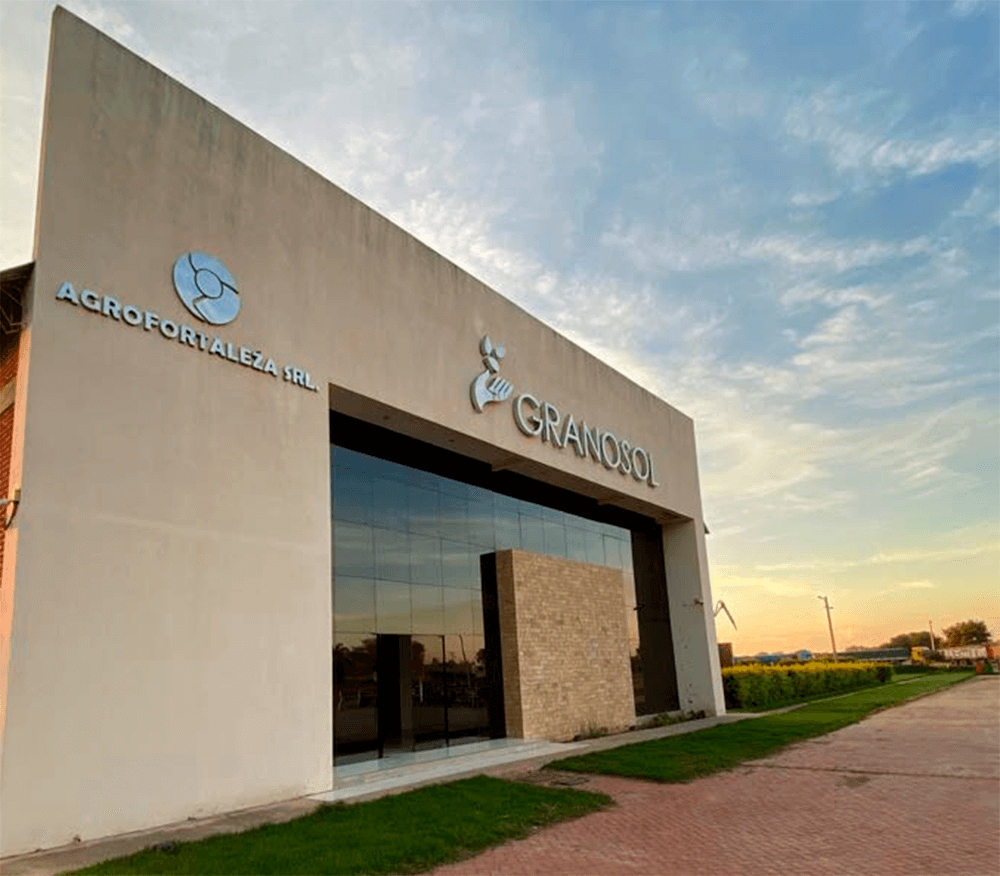
In terms of sustainability, we work hand in hand with local producers in the area under a model that seeks to ensure healthier annual harvests with reduced use of agrochemicals, which are harmful to both the environment and human health. We prioritize working with producers who share our philosophy of soil conservation and the progressive reduction of carbon dioxide emissions, so that together we can offer a Bolivian product that meets international sustainability standards. While there is still much progress to be made such as achieving international organic certifications or low-carbon emission certifications it is essential to have the support of Bolivian regulations promoted by the State. We hope that with this new vision being projected for the country over the next five years, exporters will have the opportunity to consolidate Bolivian products with high sustainability standards and international competitiveness.

“The country must modernize and encourage private companies to start investing in energy…”
3 The production of ethanol and ethyl alcohol is considered a clean alternative to fossil fuels. What real impact does it have on reducing emissions?
There is no doubt that ethanol production as a fuel is highly environmentally friendly compared to fossil fuels, whether light or heavy. The main difference lies in the emissions of components that are either non-harmful to the environment or harmful but in much lower proportions. For example, one liter of gasoline produces much more carbon dioxide than one liter of alcohol used in a vehicle. It has been proven that a vehicle running on alcohol emits up to 70% less carbon dioxide and does not produce nitrogen dioxide or other greenhouse gases generated by fossil fuel combustion. That is why we say alcohol is a clean, sustainable fuel: it can be produced annually through agriculture. This is the real impact being sought worldwide alternatives that can replace fossil fuels with renewable sources, reducing pollution and supporting sustainability.
4By-products such as DDGS, vinasse, soybean expeller, and soybean oil are part of your portfolio. How do these support a circular economy model?
Granosol is undoubtedly one of the leading companies in circular production in Bolivia. Our circular economy model is based on the ability of our industry to separate components from cereals and transform them into energy without losing their nutritional value. For example, corn, sorghum, or barley grains that we process into energy leave us with a highly valuable by-product: the flours from the distillation process, internationally known as DDGS, which are rich in protein and energy. This means that although we convert part of the grain into energy, we still preserve its nutritional capacity as food, which is then used for cattle and pig feed. Therefore, it is not true what some say—that we are “trading food for fuel.” That is not the case. Sorghum or corn has the unique advantage of providing us with energy while also leaving behind a nutritious by-product in the form of flour. This component is key to what we call a circular economy, as it becomes essential feed for the next link in the chain: cattle. With them, we close our industrial cycle, producing energy and protein simultaneously. This duality allows us to complete the circle and become a circular economy. And we are not just talking about DDGS, but also other by-products such as vinasse, soybean expeller, and soybean oil, all of which help maximize cereal use and strengthen our sustainable production model.