

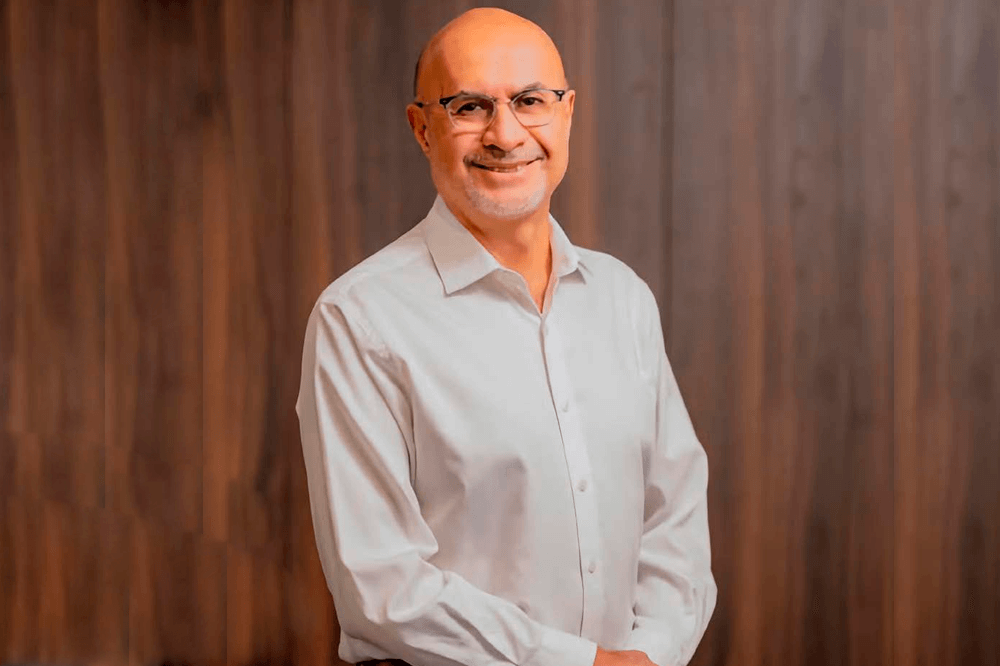
JOSÉ LUIS LUPO: “Our priority is to avoid an ENERGY SUPPLY CRISIS IN BOLIVIA”
ISSUE 144 | 2025
Presidential Forum Bolivia 2025: Energy, Economy and Future (*)
He warned that a crisis of this nature would seriously compromise the country’s political and economic stability. He recommended changes to the sector’s regulatory framework.
1 What reforms do you propose for the hydrocarbons sector in light of declining natural gas production and exports?
Bolivia is going through a deep economic and institutional crisis, caused by the mismanagement of the energy sector, which has led to the current energy crisis. This has reduced our reserves to 4.5 TCF and increased dependence on subsidized imports, worsening the fiscal deficit. Therefore, in the short term, we propose to sustain and stimulate current gas production by reforming the regulations to make investment attractive and prevent the loss of the Brazilian market, as already happened with Argentina.
In the medium and long term, we propose a comprehensive change in the energy matrix, reducing dependence on hydrocarbons and promoting renewable energy. This requires updating the regulatory framework, including the fiscal scheme (Government Take), to encourage investment, ensure supply, and ease the deficit. In short, deep reforms are needed to stabilize the sector, attract capital, and build an energy transition that guarantees the country’s economic and social development.
2 What is your position regarding fuel subsidies and imports? Would you eliminate them, reduce them, or maintain the current model?
Our position is clear: we believe fuel subsidies, particularly for diesel, must be eliminated as soon as possible. In the case of gasoline, it should be done gradually due to its strong impact on price levels in the economy.

“Today, with the best salt flat in the world, we are seeking to select a strategic international partner that offers the best technology and conditions...”
Bolivia’s misguided energy policy has reduced gas and condensate production, increasing dependency on imports, which have also been subsidized. This has completely distorted relative price structures, creating a serious fiscal problem. There are currently about 650,000 transportation units in Bolivia, and it is estimated that around 200,000 are almost constantly queuing for fuel, resulting in lost productivity and direct harm to economic activity.
Maintaining this subsidy is fiscally and economically unsustainable. To begin restoring public finances and repairing the fiscal situation, there is no more immediate alternative than to eliminate it. This is the starting point, which must then be accompanied by other macroeconomic measures, such as reviewing current expenditures, the situation of state-owned enterprises, and progressing toward a necessary exchange rate unification. That is our position.
3 What strategy do you propose to promote a genuine transition to renewable energy without compromising energy security, in coordination with the private sector and academia?
Our priority is to avoid an energy supply crisis that could threaten political and economic stability. To do this, we must first guarantee short-term natural gas supply by reviewing current regulations and working with the private sector, academia, and all relevant stakeholders. Next, we must reactivate investment in hydrocarbon exploration, regaining legal certainty lost after the nationalization, which has made Bolivia one of the least attractive countries for investment. Finally, we propose creating conditions for sustained development of renewable energy hydroelectric, wind, and solar by making the market more transparent and creating incentives that allow us to diversify the energy matrix and make it sustainable in the long term.
He was born in Vallegrande, Santa Cruz. He held important positions at the Inter-American Development Bank (IDB) and the Development Bank of Latin America and the Caribbean (CAF), including serving as IDB representative in Argentina and Colombia. In these roles, he was in charge of dozens of development initiatives involving international financing, government design, and local implementation giving him direct experience in crisis management and the promotion of economic growth. In Bolivia, he served as Minister of Economy, Government, Presidency, Economic Development, and Information. He is the vice-presidential candidate for ALIANZA UNIDAD.
4 What is your plan for exploiting lithium and other strategic resources with added value, including water management, in the context of current geopolitical tensions?
We propose starting from scratch after the mismanagement of lithium in the past, which wasted a billion dollars on inadequate technology, excluded producing regions, and caused environmental damage particularly to water resources. Today, with the world’s best salt flat, we aim to select an international strategic partner that offers the best technology and conditions, without ideological strings attached, prioritizing democracy and human rights. Our goal is to participate in the entire lithium value chain, not just export raw materials, ensuring that Bolivia and Potosí become partners in the global business. We also guarantee transparency: never again contracts revealed through the press, but projects socialized and consulted with regions, following constitutional procedures. All of this must be done in an environmentally sustainable way, protecting water and preserving the tourism potential of the Salar de Uyuni, so that we can generate lithium revenue for decades without compromising the country's natural heritage.
5 How do you plan to attract foreign direct investment for energy exploration and technological renewal under a shared-risk model?
First, we must acknowledge that Bolivia is at the end of a cycle marked by a statist model that drove investment away. To reverse this, it is key to restore macroeconomic stability, the rule of law, and legal security, with structural reforms that guarantee clear rules, protection of private property, and a reliable judicial system. In the energy sector, this means reforming Hydrocarbons Law 3058 to create an attractive framework: shared-risk contracts that incentivize exploration, facilitate technology adoption, and reduce bureaucracy. With a more liberal and competitive model, Bolivia will be able to attract capital willing to take risks and modernize its energy sector.
6 What role do you assign to ENDE, YPFB, and other state-owned enterprises in the country's new energy model?
We propose that YPFB, ENDE, YLB, and other state companies play a dual role: first, to transform into efficient, technical, and transparent entities, free from political-party interference, and capable of generating positive economic results; and second, to serve as instruments of economic policy and international relations, opening markets, attracting investment, and promoting strategic projects just as Petrobras does in Brazil. In this way, these companies will not only drive the development of the energy, hydrocarbons, and mining sectors, but also help position Bolivia globally, always with responsible management focused on strengthening public trust and national institutions.
7 What role should Bolivia play in the climate change agenda and international cooperation for sustainable development?
Bolivia should take an active and strategic role in the global climate agenda, combining productive development with environmental protection to ensure long-term well-being. This means reducing dependence on fossil fuels and promoting renewable energy, while also leveraging its enormous potential for CO₂ capture and participation in the green bonds market, which can attract significant international resources. However, this requires a state that rewards and promotes these initiatives rather than discouraging them positioning the country as a leader in green financing and sustainable development by leveraging its natural context, available technology, and existing business capacity.
“…never again contracts revealed through the press, but projects socialized and consulted with the regions, following constitutional procedures.”
(*) The Presidential Forum Bolivia 2025: Energy, Economy and Future was organized by the National College of Economists of Bolivia (CNEB), the Private University of Santa Cruz de la Sierra (UPSA), and the magazine ENERGÍABolivia, of the CECAL Group S.R.L.